
Companion Planting Cheat Sheet (Copy)
The Native Americans taught us how yield a large bounty from a relatively small space. Its called Companion Planting - a time-tested method of maximizing beauty and bounty.
Download the Cheat Sheet Here📄
Companion planting is when you intentionally place certain plant species near each other so they can benefit each other
Remember, every living thing thrives best with a friend!
Companion planting will:
Create bio-diversity (always the case in nature)
Build resilience (plant roots like to hold each other in support)
Protect the soil from the harsh sun rays by providing a living mulch which will help keep the microbes alive
Vertical planting: mix deep, medium, and shallow-rooted crops to ensure nutrient cycling in the rhizosphere.
Best vegetables for creating a living mulch:
Radishes
Beets
Carrots
Lettuce
Plant herbs in corners of the bed: the smell of herbs will deter 4- legged pests and attract pollinators.
Remember that in farming, anything with seeds is considered a fruit. Pollinators make these fruits possible.
Heavy feeders (to be planted in the middle of the bed) include anything that produces a “fruit” , like corn, cucumbers, eggplant, melons, okra, peppers, pumpkins, squash and tomatoes.
Root Depth Guide:
Shallow-rooted plants (0-12 inches)
- Lettuce
- Spinach
- Radishes
- Arugula
- Chives
- Basil
- Strawberries
Medium-Rooted Plants (12-24 inches)
- Cabbage
- Broccoli
- Peppers
- Beans
- Kale
- Carrots
- Turnips
- Oregano
Deep-Rooted Plants (24+ inches)
- Tomatoes
- Corn
- Asparagus
- Rhubarb
- Artichokes
- Sunflowers
- Dandelion
- Comfrey

Hydroponics Washing & Harvesting Packet (Copy)
Cultivation is a core daily activity of the day program at Living 42 Day. Here is the standard operating procedure for running this station.
TABLE OF CONTENTS
Food Cultivation Basics
Definitions
Hydroponic System Overview
Harvesting Station Design and Materials
Harvesting Flow
Harvesting Tips
Harvest Washing
Sanitation Station
Education and Reflection Guide
Open Note Taking Space
Living For Today Garden Training
Hydroponic Systems, Harvesting, Washing & Prep Station 1: Lessons 1, 2, and 3
Good Neighbor Gardens
We are making real food accessible and affordable by empowering and educating individuals of all ages to participate in the production and distribution of their food locally, collectively, and sustainably in order to create a more thriving earth-connected and interdependent community.
Our Partnership with Living 4 2 Day
At Good Neighbor Gardens, we have a demonstrated history of cultivating food as well as inspiring others how to grow their own food at home for their own consumption. Over the past 12 years, we’ ve administered our own self-written garden curriculum in schools to teach children how to grow their own food and become dedicated service members in their communities. Through this partnership, we hope to enhance the Living 4 2 Day clients’ daily mental and physical wellness by helping them develop the independent skills of food cultivation, preparation, and distribution in order to foster healthy, contributing individuals who are capable of self care and service to others. We want everybody to get in where they fit in, regardless of ability, because every person should have the right to be a healthy and contributing member of society. Cultivating and consuming good food is paramount to that goal.
FOOD CULTIVATION BASICS
What are the five things every living thing needs to not just survive but thrive on earth?
Water
Sun
Air
Nutrients
Love
We cultivate happy plants and good food by keeping these factors in mind!
What is a seed?
Grows under pressure
Above and below the rhizosphere
Darkness into light
Establishing relationships with the microbes, which keep the soil alive
The garden shows us how to be in a relationship with abundance and how to maintain that connection.
DEFINITIONS
Channel
The long white structure with holes that the plants grow through and worm tea flows in.
Tote
What the harvest will be collected in as well as the waste. Totes will look different depending on their purpose.
Dual-Purpose Tables
These tables will be used for both harvesting and sanitizing the channels and should be considered unsanitary.
Drain Tubing and Connectors
The tubes that bring water into the channels. You will be plugging and unplugging these as you go through the harvest cycle
Worm Tea
The liquid that goes in the channels to provide nutrients for the hydroponic garden.
HYDROPONIC SYSTEM OVERVIEW
What is hydroponics?
A method of growing plants without soil, using a nutrientrich water solution instead
This technique allows for controlled environment agriculture and can be used indoors or in greenhouses
Why grow food using hydroponics?
Year-round food production
Fast growth
Reduced water
Reduced pests and pesticides
Greater control over growing conditions
What is vermiponics?
A method of growing plants that combines hydroponics with vermicomposting (using worms)
This technique allows for zero-waste nutrient cycling without the use of synthetic nutrients
At Living 4 2 Day, the hydroponic system operates using worm tea as the growing medium to grow food.

Growing Guide Cheat Sheet (Copy)
The concepts and sayings you will find included in this Growing Guide Cheat Sheet are Mia's unique principals to grow by and are intended to act as a cultivating playbook for anyone who is interested in developing a growing practice.
“The 5 things every living thing needs to not just survive but thrive in the garden”
Sun, water, nutrients, air, and love. Without these 5 things, all of life on earth wouldn’t exist
“Every living thing thrives best with a friend”
Humans and plants alike thrive in community! Plants enjoy having other plant companions nearby. Their root systems intermingle with one another and cycle nutrients throughout the soil.
“Plant full”
Plants thrive in community, both in the rhizosphere (root zone) and the phyllosphere (above ground). Always plot-plan with a combination of shallow, medium, and deeply rooted plants. That’s how you maximize nutrient cycling and create a “living mulch” of greenery that protects and builds the soil and feeds the microbes to keep the soil alive.
“As above so below”
The tap root below the ground can be as deep as the plant is tall above the ground. The feeder roots can grow as broad in the soil as the leaves are in the air. Keep this in mind while plot planning your garden bed.
“Your finger is your best tool“
Your index finger is your best tool to check whether your soil is moist enough. Stick your finger down to the second knuckle. If the soil isn’t sticking to your finger when you pull it out, it isn’t hydrated enough.
“Roots don’t grow in the soil, they grow in the air in the soil”
Roots will have a much harder time growing in compacted soil. This is why it’s important to keep the soil light and fully when planting. Also, healthy soil is filled with worms that are creating pathways in the soil and aerating it, making room for the roots to spread themselves.
“Water isn’t wet, it makes things wet”
Water molecules are attracted to each other, not to the surface we intend to hydrate. Water won’t penetrate a dry surface, the surface has to be wet in order for the water molecules to penetrate. If the soil is dry, we call it “conditioned hydrophobia”, so the water will just roll off. This is why we use drip irrigation-- it mimics the rain which penetrates naturally. The flow must be slow and steady.
“Did you put your love in it?”
The most important question in the garden! Nothing in the garden will thrive if you don’t put your love and care into it, whether you are planting, maintaining, or harvesting. Act mindfully and be intentional with how you treat the plants.
“The bigger the longer the smaller the shorter”
In reference to the compost, the bigger the item, the longer it will take to break down. The smaller it is, the shorter amount of time it will take to break down. This is why it’s important to chop your compost into small pieces when you add it to the bin
“50% greens, 50% browns, and wet like a wrung out sponge”
In order to maintain a healthy compost bin, make sure that you are adding an equal amount of “greens” and “browns” and are watering it so that it is wet like the moisture of a sponge after you squeeze it— not sopping wet but moist enough.

Planting Seeds Cheat Sheet (Copy)
A seed has everything it needs encoded in it to become the very thing it was destined to become. Its up to us to plant them mindfully and faithfully to ensure germination and growth.
What is a seed?
Grows under pressure
Lives in the rhizosphere and phyllosphere
Goes from darkness into light
Establishes relationships with the microbes, which keep the soil alive
The garden shows us how to be in relationship with abundance and how to maintain that connection.
5 things every living thing needs to not just survive but thrive
Sunlight
Water
Nutrients
Air
Love
When planting seeds, be mindful of where the seed will receive water
Plant seeds near the drip emitters!
Fun fact: saliva contains rooting hormones—some farmers suck on seeds before planting to aid germination.
Direct Sowing Seed Tips:
1.Make certain that the soil in the raised bed and around the seedling is sufficiently wet like a wrung out sponge.
2. Drag your pinky finger along the drip tubing ½ inch deep. If the line is too deep, the seeds will take too long to germinate. If it’s too shallow they will dry out.
3. Sprinkle nitrogen-rich worm castings along the same line no thicker than a sprinkle donut.
4. Pour some seeds in the palm of your hand. Protect them by making a fist. Use your thumb to swipe them out with your fist closed until the line is filled.
5.Cover the line with a handful of soil so the seeds are not showing.
6. Dust the line with a relatively thick layer of peat moss to help retain moisture so your seeds will germinate.
7. Deeply water the planted seeds with a watering can without getting the nearby plant leaves wet. This helps prevent sun scorch or mildew. You may have to use your other hand to hold the leaves out of the way to do this properly.
8. Give the seeds your love, hope and well wishes. They can hear your spirit shining through the sound of your voice because you planted them and they are eager to rise to life!
A seed already has everything it needs to reach it’s full potential.
The first two leaves that pop out of the seed are called the cotyledon. These first two leaves are what the seed uses to photosynthesize and grow bigger and stronger.

Plant Tropisms and Responses Glossary (Copy)
In order to understand how a plant grows, we must consider how they distribute their energy to synthesize the 5 critical inputs that all living organisms need in order to thrive and not just survive.
Tropisms are how plants make use of the 5 things that every living thing needs to thrive— sun, water, air, nutrients, and love.
Phototropism: Growth toward light; helps maximize photosynthesis.
Heliotropism: Tracking the sun’s movement across the sky (e.g., sunflowers).
Hydrotropism: Roots grow toward water sources.
Gravitropism: Roots grow downward (positive) and shoots upward (negative) in response to gravity.
Thigmotropism: Growth in response to touch; vines wrapping around supports.
Chemotropism: Growth toward or away from chemicals (e.g., pollen tube toward ovule signals.) Aerotropism: Growth response to oxygen availability.
Thermotropism: Growth in response to temperature changes.
Nyctinasty: Daily leaf movements responding to light/dark cycles (e.g., prayer plants).

Soil Cheat Sheet (Copy)
Soil is the living medium that supports all life. In regenerative farming we must be soil-focused in order to cultivate good food and build the necessary aggregates to ensure sustainability and resilience.
A raised bed is its own ecosystem, different from hydroponics.
Healthy soil = aggregates of air, water, nutrients, microbes, and organic matter.
Components of a good raised bed mix:
Topsoil – foundation layer.
Perlite – improves aeration and drainage.
Top mulch layer (wood chips) – hold moisture, aerate soil, and release nutrients slowly as they decompose.
Coco coir – creates a fungal environment in the soil and helps to retain moisture.
Sand – improves drainage (fruit trees especially don’t like “wet feet”).
Earthworms – aerate soil and provide castings (bacterial-dominant fertilizer).
Balance:
Vegetables → thrive in bacterial-dominant soil.
Woody herbs → thrive in fungal-dominant soil.
Farmers aim to strike a healthy balance between the two, depending on what they are growing.
The rhizosphere (root space) is where roots, microbes, and nutrients cycle. Our job is to create conditions for microbial life to thrive here.
Soil is a living organism just like you and the plants.
The three components that make up healthy organic soil are:
Sand (for drainage)
Topsoil (for the roots to grab onto)
Compost (provides nutrients and bacterial dominance)
In order to determine the appropriate amendment to use, reference the 5 things that every living thing needs to thrive. Once you know what your soil is lacking, you will understand how to best amend it.
When determining how to amend the soil, your best tool is your hand— feel the soil!
When you feed the soil, you can understand what it is missing and if you need to make amendments
The 3 macronutrients that every plant needs in order to develop to full maturity and endure until the end of the season are:
N: Nitrogen
Top of the plant/leaf development and greening
Makes the cotyledon come out and makes colorful chlorophyll
Beginning experience with the plant/season
P: Phosphorous
“Ferocious” phosphorous
Middle of the plant such as stems, architecture, and fruit Middle experience with the plant/season
Usually seedlings need more help from phosphorous as opposed to seeds
K: Potassium
“Potassi-yum” , makes the fruit taste better
Bottom of the plant/root zone
End of the plant’s life/end of the season
Encourages flowering and fruiting
If we foliar feed our plant at the end of the season with potassium, it might even produce more fruit
Seasonal Pest Calendar and Tips (Copy)
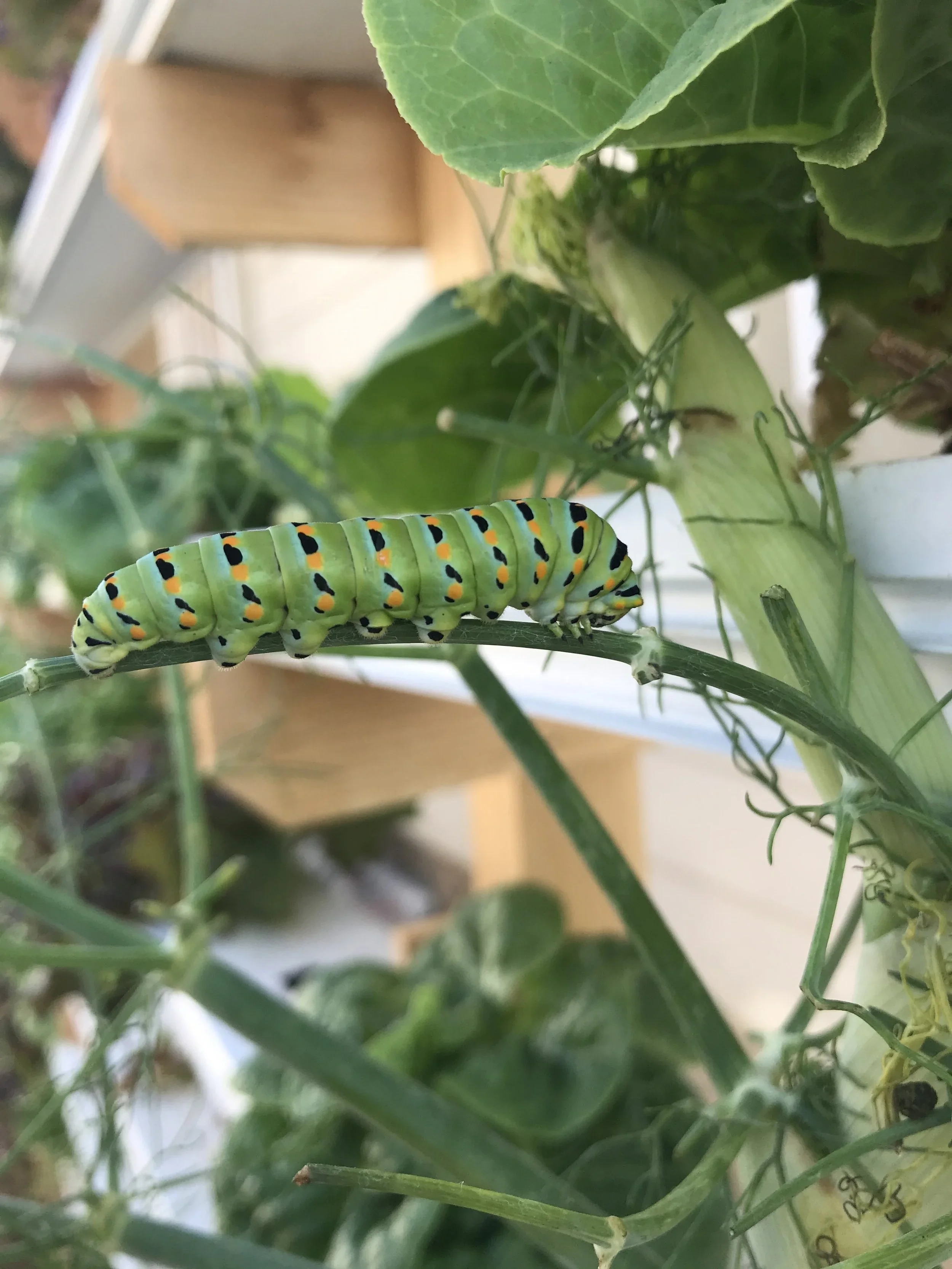
Bugs are a natural part of any garden habitat. They all have a unique purpose whether its pollination, decomposition, or biological pest remediation. Its best to get to know them and have a healthy respect for them. Here is a helpful buggy resource.
Spring (March-May)
Aphids on tender shoots
Flea beetles target seedlings
Cabbage worms on brassicas
Best Crops: Lettuce, peas, broccoli
Tips: Use row covers, interplant herbs (dill, cilantro) to attract predators
Summer (June-August)
Whiteflies & spider mites thrive in heat
Tomato hornworms appear
Squash bugs & cucumber beetles peak
Best crops: Tomatoes, peppers, squash, beans
Tips: Encourage ladybugs & lacewings, use mulch to conserve water
Late Summer - Early fall (Sept-Oct)
Aphids, mites, beetles at peak
Borers attack weakened plants
Fungal diseases increase
Best crops: kale, carrots, broccoli
Tips: Remove spent plans, compost residue, rotate crops
Late Fall - Winter (Nov - Feb)
Snails & slugs thrive in cool damp
Soilborne diseases linger
Fewer insect pests overall
Best crops: spinach, garlic onions
Tips: Plant cover crops (rye, vetch), use organic mulch to suppress weeds

Watering Cheat Sheet (Copy)
Water is one of the 5 essential things that every healthy garden depends on to thrive. It’s important to understand how water behaves and how it is best delivered in order to maintain healthy microbial life and nutrient cycling in the soil to benefit all the life that lives in it.
Water is: Colorless and tasteless Absorbs light (supports photosynthesis) A universal solvent (dissolves nutrients and minerals) Conducts electricity via ions Required for all life on Earth Molecules are cohesive (attracted to each other) Sensitive to its environment—studies suggest it changes structure based on how it’s spoken to.
Water is more than just a liquid—it’s alive and dynamic. The way we treat and talk about water matters—water holds energy and information.
Drip Irrigation
Delivers water directly to the root zone, where it’s needed most
Helps reduce weeds (you'll mostly only see "indicator weeds" near leaks)
Conserves water and supports healthier plants
In San Diego, our city water contains chlorine and chloramine, which are salts that can dehydrate soil and damage microbes. Adding compost to beds help mitigate these chemical effects.
Water = life. Quantity and quality both matter.
At Living 4 2 Day, we use ¼ inch tubing with drip emitters every 6 inches in all of the raised beds
Key principle: watering tells the plant to go to work. Too much or too little stresses the plant, creating conditions for pests and disease.
Soil should form a ball in your hand and be wet like a wrung-out sponge.
Other helpful tips:
Never water in the heat of the day.
Always water the root zone, not the leaves.
You will burn the leaves if you water them during the day!
If you need to water during the day, lift the leaves up with your hand so that the water doesn’t touch them.
Be careful not to dribble water on the other plants with the hose while you’re watering!
Consistent moisture = stronger plants and fewer pests.
Avoid letting beds dry out completely (water will roll off dry soil).
Never plant a dry seedling in dry soil!
Make sure the root ball is wet like a wrung out sponge before planting.

Maintenance Cheat Sheet (Copy)
A well maintained garden is a bountiful garden. Understanding best practices for maintaining your garden is a necessary part of cultivating an abundant harvest.
A well maintained garden is a bountiful garden.
The key to maintenance is good observation. When you keep a close eye on your garden, you may notice:
Yellowing leaves
Decomposing critters (like rolly pollys)
Bite marks from critters
Poop from critters
Dead parts that need to come off
Signs of disease
Pruning:
We prune the parts of the plant that are yellowing, dead, or touching the ground in order to make room for new life and redirect the energy of the plant.
An example of this is “deadheading” a flower plant.
We may also prune parts of the plant that are covered in powdery mildew, though wet try not to take more than ⅓ of the plant at a time or it will go into shock.
Succession Planting:
This is a gardening technique where you stagger the planting of crops to maximize your yield and keep the soil healthy.
n other words, you know which plants are going to come out so you plant others before they do to maintain the rhizosphere.
A key example of this is planting beans as a cover crop to bring more nitrogen to the soil before planting you heavy feeders
Gardeners often utilize succession planting to shade the create an overstory/understory of vegetation.
Topdressing:
Topdressing with compost helps provide more nutrients to the plants as they grow.
Ideally, we are topdressing the soil with compost throughout the season.
To topdress, layer 2-4 inches of fresh compost on top of the soil as needed.
Fallow:
Sometimes, the best thing to do for your soil is to let it sit “fallow” , meaning leaving it unplanted for a season so it can rest and recover it’s nutrients.
Letting a garden sit fallow can also help break pest and disease cycles.
Integrative Pest Management (IPM):
We can plant out our garden in a way that reduces pest damage, such as planting onions, garlic, and flowers on the perimeter of our garden bed.
Through observation, we can identify pests and the potential ways they are impacting the gardens
Curled leaves are a sign of distress, check for hornworms, ants, and caterpillars when you see curled leaves
Supports/Trellising:
Trellising is adding vertical support structures to a plant to promote better architecture, save space, reduce disease, improve air circulation, and increase yield
This can be accomplished with stakes, mesh, or netting
The earlier you trellis a plant the better. Once a plant is mature, it is more likely to break when trying to add supports
You might also want to add support to your immature plants using cloches if you are worried about hungry critters
Harvesting:
When you consistently harvest, the plant is encouraged to flower and fruit due to trigger response.
Otherwise, the plant will focus on seedmaking and near the end of its life and die off
Harvesting Tips Warm & Cold Season (Copy)
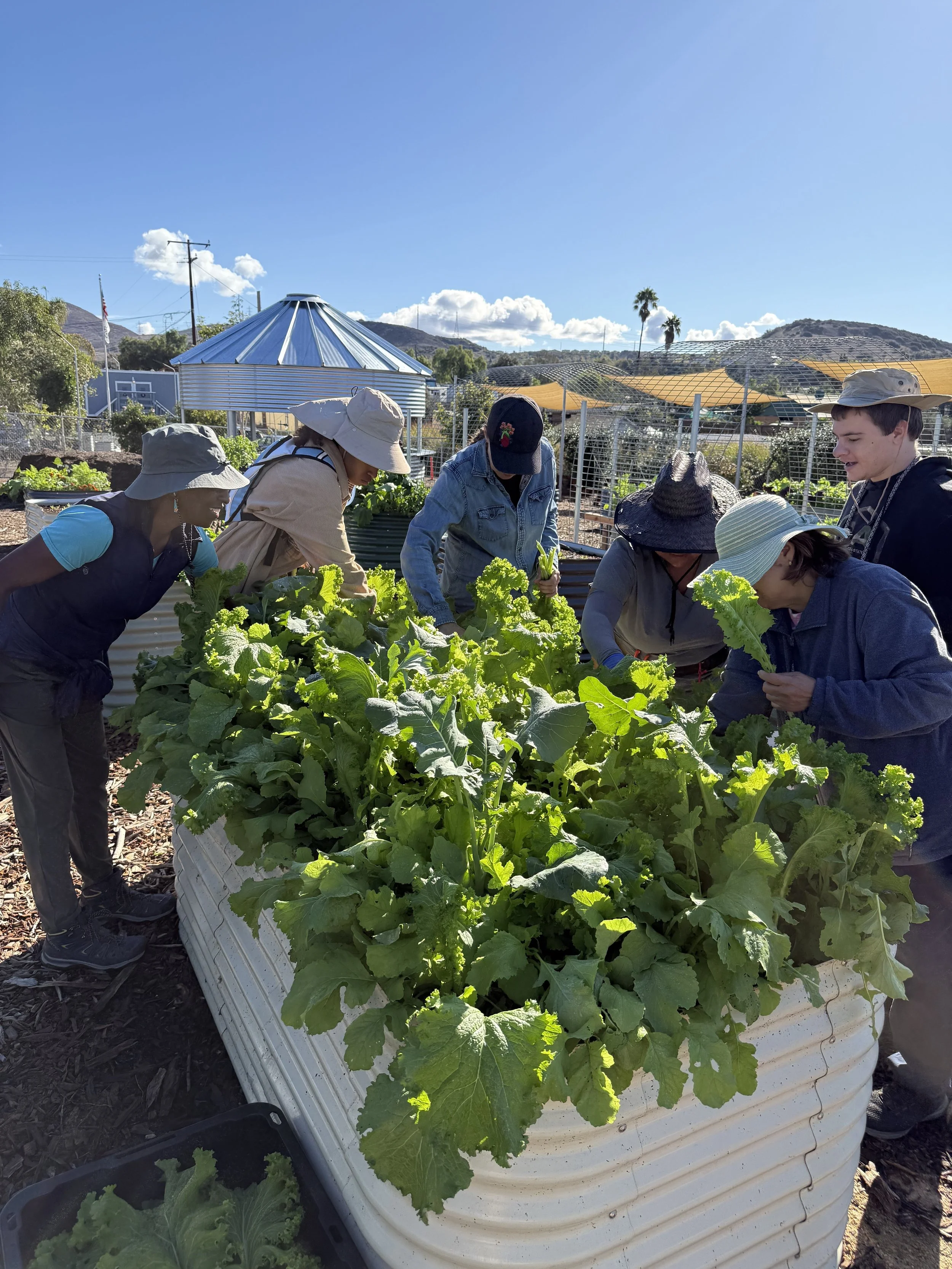
This harvesting tip sheet offers a species-specific approach to harvesting warm and cool season vegetables, as well as a guide to general harvesting techniques.
Download the Cheat Sheet Here📄
HARVESTING TIPS
INTRODUCTION
During the “warm season” , we’re harvesting a greater variety of crops than we harvested during the cooler months. A basic knowledge of harvesting tips and techniques will not only improve your yield but also maximize the nutritional content in your food. How do we know when to pick those vegetable “fruits” like tomatoes, cucumbers, beans, etc,., among many other things? INTRODUCTION As with any gardening endeavor, a good rule of thumb is to know your plant. All vegetable crops differ, just as landscaping plants are different - some grow taller, some grow shorter, some need more water than others, etc. Some varieties of a given crop grow much larger than other varieties of the same crop. Some crops turn a certain color when ripe, others another color. Know your plant! Minimize damage to plants by harvesting with clean sharp cuts using clippers or kitchen scissors, whenever possible. Pulling or tearing can rip stems and damage tender leaf tissue; roots and stems of young plants in particular are easily damaged when the harvest is “pulled” off the plant. Many vegetable fruits like tomatoes and melons will pop right off the plant when ripe, so you won’t need clippers for that, though it sometimes makes the job easier. Generally, vegetable crops remain fresh in storage longer when picked early in the morning or in the evening after the sun has set. Any crop can be harvested any time of the day for immediate use. Many leafy vegetables and roots crops quickly wilt when picked during the hottest part of the day. Know your plant - it’s fun! To take some of the guess work out of it all, here are some of the basics for harvesting your warm season crops.
VEGETABLE “FRUITS”
Many of our most common vegetables are actually fruits, e.g. tomatoes, eggplants, cucumbers, squash, tomatillos, etc. When to harvest each depends on which crops you ’re harvesting. Within a given crop, there are many different varieties that may need to be harvested at different times. For instance some tomatoes and peppers are ripe when they are red, some yellow, and some orange. Again, know your plant!
TOMATOES
Often tomatoes are picked based on color and softness. That being said, some varieties have thicker skins than others when ripe, especially when grown in pots. Tomatoes are generally softer when ripe but not necessarily, and tomatoes within a given variety vary in size quite a bit when ripe. Therefore, color is your best cue for when to pick tomatoes. Tomatoes can ripen in a wide variety of colors depending on the variety from the pale yellow ‘Lemon Boy ’ to the bright orange ‘Sungold’ to the green/gold marbled ‘Green Zebra’ , to the deep red ‘Beefsteak’ to the rich, dark red ‘Black Krim’ . Know your plant! Here’s another way to check for tomato ripeness. Have you ever noticed that little “knuckle” in the tomato stem where it joins the rest of the plant? If you gently pull on the tomato to flex that knuckle, a ripe tomato will pop right off. If you feel the slightest resistance, the tomato should be left on the plant.
PEPPERS
Like tomatoes, there are many kinds of peppers, and you ’ll have to know what kind of pepper you have to really know when to harvest. For some peppers the “fruit” grows much bigger (e.g. Poblano, Bell) while some remain smaller (e.g. Padron, Serrano); some turn red, orange, yellow, purple, or even brown when fully ripe. Almost all green-colored peppers will change to some other color, or ripen, if left on the plant long enough. Yes, a green bell pepper is always just an unripe bell pepper. Jalapenos, Anaheim, and Sweet Banana will turn red and often develop sweeter or more robust flavor if left on the plant. You might then ask then, “So when I go to the store why do I see only green Jalapenos, Poblanos, Anaheim, etc. and not red ones, if red means ripe?” For many people “green” colored peppers are good enough, especially when grilled or sautéed. But the main reason peppers are picked green is the yield in numbers of peppers per plant is much higher. If the plant can’t grow ripe peppers (fruit) the plant must make more flowers to try again, which results in more peppers (fruit). This is the basic idea of “deadheading” spent flowers - to remove the potential seed pod so that the plant must put more energy into creating more flowers. So if all peppers were picked ripe, they would cost more because (1) they take longer to ripen and (2) the yield is lower per plant, because the plant puts more energy into seed, not needing more flowers and the subsequent peppers (fruit). When to pick peppers is entirely up to you and your tastes. Experiment, and of course, know your plant.
CUCUMBERS
With cucumbers you really need to know what kind or variety you have to know when to harvest. There are many different kinds, and they all have the potential to produce a lot of cucumbers. Knowing when to pick each kind gives you optimal flavor, thinner skins and less seeds. If left on the plant too long, all cucumbers vastly decline in flavor, the skin grows thicker, and the seed grow bigger and harder. For instance, Persian Cucumbers when picked 5-7” long will have very thin skins, few or no seeds and a nicely, sweet flavor. Japanese Cucumbers and Burpless/English Cucumbers, may grow up to two feet long before they need to be picked. The common slicing cucumbers are picked 6-9” long before the skin gets thicker and the seeds become harder. Armenian Cucumbers get huge, and are light green with long ribs. Lemon Cucumbers (look like lemons, taste like cucumbers) are best picked based on color. Pale yellow is what you want; if left on the plant too long, Lemon Cucumbers will turn a brownish, golden-yellow - at this point they ’ll have really thick skins and lots of hard seeds. The popular Pickling Cucumbers actually make some of the best slicing cucumbers; pick them whatever size you want usually between 3-5” long.
SUMMER/WINTER SQUASH & PUMPKINS
All kinds off squash are best planted during the warm season from late winter or early spring through fall, depending on the type of squash. In more protected microclimates zucchini squash, and others, can produce all winter long. Summer Squash and Winter Squash differ by when they are harvested. Summer Squash varieties are picked and eaten right away; Winter Squash varieties differ in that the squash/fruit stores for the winter. Summer Squash varieties include: Green/Yellow/Italian/Mexican Zucchini, Crookneck Squash, Patty/Peter Pan/Scalloped Squash, 8 Ball Zucchini Squash. Winter Squash varieties, on the other hand, include: Acorn, Butternut, Delicata, Sweet Meat, Blue Hubbard, Spaghetti, Pink Banana among many, many others. Summer and Winter Squash are harvested differently based on what is known as the “thumbnail test” . For Summer Squash, you can harvest if you can push you thumbnail into the skin of the squash; if your thumbnail won’t go into the squash, it’s over-ripe and not, so good. Winter Squash, however, should be harvested only if your thumbnail will not press into the skin of the squash. Once the skin is that hard, it will store for much longer than if the skin is still soft enough for your thumbnail to go into it. Pumpkins are actually a type of winter squash so use your thumbnail test after they turn color.
MELONS
Melons are one of those fruits that do not ripen any further once they are picked from the plant. Generally melons refers to Watermelon, Cantaloupe, Honeydew, Crenshaw, Canary, Christmas, Honeyloupe, Casaba, and many more. When melons are fully ripe the “flower end” of the fruit (i.e. the end where the flower was attached) should be slightly soft; watermelons are maybe an exception. Also, a ripe melon will typically separate easily from the vine and pop right off when gently moved. If you feel any resistance from the fruit trying to separate it from the vine, leave it for another day.
EGGPLANT
Here again it is really important to know what kind of eggplant you have. Some mature when dark purple (e.g. Ichiban, Japanese Millionaire, Italian); some when light purple (e.g. Chinese eggplant like Ping Tung Long) some when white (e.g. Caspar), some when green (Kermit), some when multicolored (e.g. Rosa Bianca). Brown tints in the skin often means the plant has been left on the plant too long.
BEANS
Pole beans vs. bush beans differ in their growth habit but are similar in how and when they ’re harvested. Bean are picked depending on how they ’re used. When picked for the edible pod Green Beans, Burgundy Bush Beans, and Yellow Wax Beans, for instance, are picked as small you want up to as large as you want, as long as the skin is still soft. “Cooking” beans like Lima, Kidney, Black Eyes Peas, and Cow Peas are harvested once the seed pod has dried on the plant. After the seed pod has dried the beans will store for a much, much longer time than when harvested fresh. The most important thing to remember when harvesting all beans, is to actually pick them! Being an annual, peas have basically one season to grow, create seed and die. By removing the pods (which prevents the plant from “going to seed“), the pea plants will have no choice but to continue to flower and thus make more pods. By allowing seeds to remain on the plant in unharvested pods, production greatly declines. This is mainly the same reason why commercially grown peppers are picked green.
“ROOT” CROPS (BEET, CARROT, RADISH, PARSNIPS, TURNIP, RUTABAGA, ETC.)
How does one know when to harvest carrots, beets or radishes if the root is in the ground? The best way to know if your root crops are ready to harvest if to work your finger around in the top inch of soil feeling for those swollen roots. The nice thing is that almost all root crops tend to push themselves up out of the ground a bit as the root develops. Especially for those of you with shallower raised beds, you may see a portion of the top of the roots exposed. It is a good idea to keep covering the tops of exposed roots with compost if they push up a bit. Radishes and carrots tend to have that basic 1” size that we are all familiar with. Beets, turnips, and rutabagas on the other hand can widely vary in size depending on the variety, spacing, and environmental conditions (water, soil, etc.). Again, the best method to know when to harvest is to poke around a bit in the ground. Radishes are one of the quickest root crops to mature, while carrots and parsnips will take several months. Remember that the leaves of all the above mentioned roots crops can be eaten too!
ALLIUMS (ONIONS, GARLIC, SHALLOTS, GREEN ONIONS, CHIVES, LEEKS, ETC.)
“Allium” refers to the botanical name for Onions, Garlic, Shallots, Green Onion/Scallions, Chives, Garlic Chives, Leeks, etc.). Different Alliums are harvested in different ways depending on which one you have. For Onions, Shallots, and Garlic we’re harvesting a actual “bulb“ . As with the root crops described above, you can poke around with your finger to see how the bulb is growing and when to harvest. All three of these will store longer if you let them “dry out” for a few days before storing. Storing any type of bulb with wet skins can promote mold.
With Green Onions, Chives, and Garlic Chives and Leeks, we’re typically harvesting shoots of the plant, which are often sold bundled. But did you know that Alliums are perennial crops? You can simply clip or cut them off at the base and they will regrow. You might say, “But I like the white part of the Green Onion or Leeks down in the ground. ” Certainly you can go ahead and pull them up; you can also pull away some of the soil and cut the shoot off down lower to get more of the “white” . As long as the roots are intact, the plant will regrow
PERENNIAL HERBS (SAGE, THYME, ROSEMARY, WINTER SAVORY, OREGANO, MARJORAM, ETC.)
Herbs can be harvested fresh as needed or harvested and dried for future use. Common sense typically prevails here, so just clip any leaves as you need them. These perennial herbs will persist for many years. By harvesting the leaves on the branch tips, you will induce the plant to branch more, which increases your yield. The flowers on any of these herbs are edible too! Use the opportunity you have harvesting to shape your plants any way you would like.
ANNUAL/BIENNIAL HERBS (DILL, CILANTRO, PARSLEY, BASIL, ETC.)
Dill, cilantro, and parsley all have the same basic growth habit. They grow leafy shoots that eventually produce a flower at the top of the shoot (sooner in cilantro, later in parsley). Here again, clip any leaves that you need as you need them. You can either harvest the oldest leaves on each plant or cut groups of leaves a couple of inches above ground level. Regular scissors work fine; be sure they are sharp. Simply pulling on the leaves of a young cilantro plant, for instance, can uproot the entire plant. If you see your dill or cilantro start to create a vertical flowering stem, cut that off (harvest the leaves on the stem). When you prevent the plant from flowering, it will be forced to grow more leaves.
ANNUAL/BIENNIAL HERBS (DILL, CILANTRO, PARSLEY, BASIL, ETC. CONTINUED)
Basil, on the other hand, grows differently from the above mentioned annual herbs in that it creates branches, more like a shrub. Here again, one can simply harvest any leaves that you need. We suggest you target two types of leaves for harvest. (1) First, harvest the largest leaves on the plant. By removing the largest leaves, usually those attached to central stems, more light reaches the interior of the plant. (2) Harvest stem tips. This promotes more branching and bushiness and prevents flowering, both of which increase yield. Never let your basil plant flower. Because they are annuals, once basil starts to create seed, “it’s job is over” , and plants start to decline. As soon as you see a flower bud forming at the end of a stem, nip it off; eat it too! A few types of basil are actually perennial (e.g. African Blue basil, Greek Columnar basil, Tulsi/Holy Basil) and should be harvest like the above mentioned perennial herbs. These plants will have a better shape and a higher yield of leaves if prevented from flowering. However, there is no need to prevent flowers because the plants are perennial. African Blue Basil is one of the best bee attractors for the vegetable garden; it produces no seed and become a large shrubs; try eating the flowers!
WARM SEASON SALAD GREENS
We see the common salad greens in the store (e.g. lettuce, spinach, chard, arugula, kale, etc.) in one of two ways: (1) whole plants (e.g. heads of lettuce), or (2) packaged “baby ” greens or young leaves. The tradeoff here is that we can let a plant “mature” and harvest a larger quantity at one time or we can regularly harvest tender, younger, more nutritionally rich leaves over a longer period of time. We like to encourage home gardeners to harvest the second way, by removing one or two of the lowest, “baby ” leaves on each plant. Harvesting this way, the plant continues to grow by creating new leaves in the center of the plant while you remove the oldest, lower leaves on the plant. “Baby Greens” typically does not refer to any particular variety of plant, but simply refers to leaves that are picked when young and small. For lettuce, remove as much of the leaf as possible. For those leaves with “stalks” like kale, spinach, chard, and arugula, harvest the entire leaf stalk too. Harvesting the stalk also helps the leaves last longer in the refrigerator. Lesser common, truly heat-tolerant salad greens include many common weeds like Lamb’s Quarters, Purslane, Amaranth, as well as perennial plants like Malabar Spinach, Salad Burnet, Longevity Greens. Explore some of the “wild” salad greens, and ask your farmhand about including some of your favorites.
GET READY TO PICK!
While it is vitally important to “know your plant; you must also be ready to get out there and harvest. Don’t be afraid to pick leaves. Have part of your daily routine to go out and at least look at the plants in your garden. I really believe that if you at least go look at your plants every day, they ’ll grow better; I can’t prove that, but I guarantee it’s true. Have fun gardening, ask questions, and know your plant!
FALL & WINTER HARVESTING TIP SHEET
A basic knowledge of harvesting tips and techniques not only maximizes your yield but maintains the nutritional content in your food. Generally, vegetable crops remain fresh in storage longer when picked early in the morning or in the evening after the sun has set. Any crop can be harvested any time of the day for immediate use. Minimize damage to plants by harvesting with clean sharp cuts using clippers or kitchen scissors. Pulling or tearing leaves can not only damage tender leaf tissue, but can also puts stress on young roots. As with any gardening endeavor, a good rule of thumb is to know your plant. All vegetable crops are just as different as landscaping plants - some grow tall, some need more water than others, etc. Know your plant - it’s fun! To take some of the guess work out of knowing when to harvest, here are some of the basics for harvesting your fall/winter crops.
SALAD GREENS (LETTUCE, CHARD, SPINACH, ARUGULA, KALE, MUSTARD GREENS, ETC.)
We see salad greens in the store in one of two ways: (1) whole plants (e.g. heads of lettuce), or (2) packaged “baby ” greens or young leaves. The tradeoff here is that we can let a plant “mature” and harvest a larger quantity at one time or we can regularly harvest tender, younger, more nutritionally rich leaves over a longer period of time. We like to encourage home gardeners to harvest the second way, by removing one or two of the lowest, “baby ” leaves on each plant. Harvesting this way, the plant continues to grow by creating new leaves in the center of the plant, while you remove the oldest, lower leaves on the plant. Remember that “baby greens” does not refer to any particular variety of plant, but simply refers to leaves that are picked when young. For lettuce remove as much of the leaf as possible. For those leaves with “stalks” like kale, spinach, chard, and arugula, harvest the entire leaf stalk too. Harvesting the stalk also helps them last longer in the refrigerator.
COLE CROPS OR BRASSICAS (BROCCOLI, CAULIFLOWER, CABBAGE, AND KOHLRABI)
With these crops we get one main “head” per plant. The head is harvested by cutting below the base of the head with a few of the outer most leaves attached. The leaves on all these plant are quite edible. Removing too many leaves before harvest, however, can reduce the size of the mature “head” ,
Cabbage heads can widely differ in mature size, depending on the variety and environmental conditions. Often heads are left on the plant as long as the outermost leaves still look good. Cabbage should be harvested as soon bugs like cabbage worms start to find them.
Kohlrabi will produce one swollen stem base per plant and is harvested by cutting below the head and the side leaves removed. The kohlrabi head is roughly the size of a grapefruit when mature.
Broccoli heads widely differ in size depending on variety and environmental conditions. The central head may be 5-8” across or more for early varieties (e.g. ‘Pacman’ , ‘Green Comet’) to 10-14” or more for later maturing varieties (e.g. ‘Premium Crop’).
COLE CROPS OR BRASSICAS (BROCCOLI, CAULIFLOWER, CABBAGE, AND KOHLRABI CONTINUED)
Cauliflower heads will are typically picked after reaching 5-6“ or more. If left on the plant too long the bugs definitely will find heads. As the cauliflower head approaches 5-6” across, the top one or two leaves are bent to cover and “blanche” the developing head. All other things being equal, the heads of yellow (‘Cheddar’) and purple (‘Graffiti’) cauliflower tend to mature smaller than white varieties. The presence of yellow flowers indicates that you waited too long to harvest. While other heading cole crops produce only one main head and that‘s it, a healthy broccoli plant, on the other hand, will continue to produce many, many small side florets throughout winter once the central head is removed. Broccoli is actually a collection of immature flowers. If you do not allow the broccoli plant to make any yellow flowers, that is if you pick the florets before any flowers ever open, you will have tons of side florets to harvest. If the plant is allowed to make but a few flowers, seeds will begin to form, and yield of side florets greatly diminishes.
LEAFY MUSTARD GREENS (BOK CHOY, NAPA CABBAGE, MIZUNA, RED GIANT, KOMATSUNA, ETC.)
Those plants we collectively call “mustard greens” are harvested much like salad greens. One can either wait to harvest a larger more mature plant, or harvest the younger lowest leaves on the plant. Again we recommend the second method. Harvesting just a few leaves of bok choy or napa as needed will give you a more nutritionally rich harvest. And picking just a few leaves at a time as needed will extend your harvest over a much longer period of time. As with salad greens, remember to harvest the entire leaf base, and using scissors or clippers works better than tearing leaves.
“ROOT” CROPS (BEETS, CARROTS, RADISH, TURNIP, RUTABAGA, GARLIC, ONIONS, ETC.)
How does one know when to harvest carrots, beets or radishes if the root is in the ground? The best way to know if your root crops are ready to harvest if to work your finger around in the top inch of soil feeling for those swollen roots. The nice thing is that almost all root crops tend to push themselves up out of the ground a bit as the root develops. Especially for those of you with shallower raised beds, you will see some of the top of the roots exposed. Radishes and carrots tend to have that basic 1” size that we are all familiar with. Beets, turnips, and rutabagas on the other hand can widely vary in size depending on the variety, spacing, and environmental conditions (water, soil, etc.). Again, the best method to know when to harvest is to poke around a bit in the ground. Radishes are one of the quickest root crops to mature, while carrots and parsnips will take several months. Remember that the leaves of all the above mentioned roots crops can be eaten too!
OTHER CROPS
Green onions are often sold in bundles. But did you know that green onions (also called scallions or bunching onions) are perennial crops? You can simply clip or cut off the green onions at the base and they will regrow. You might say, “But I like the white part down in the ground. ” Certainly you can go ahead and pull them up; you can also pull away some of the soil and cut the shoot off down lower to get more of the “white” , and as long as the roots are intact, the plant will regrow.
Sugar Snap / Snow peas are one of the few fall/winter crops in which we harvest an actual “fruit” . We harvest snow peas for the edible pod, once it reaches the size we like. We harvest snap peas for the edible pod and seeds once the peas have formed and the pod swells. Shelling peas are harvested for the seeds (peas) alone and not the pod; harvest once peas have fully filled the pod. If the pod itself turns dry and/or yellow, you ’re likely waiting too long to pick them.
The most important thing to remember when harvesting all peas, is to actually pick them! Being an annual, peas have basically one season to grow, create seed and die. By removing the pods (which prevents the plant from “going to seed“), the pea plants will have no choice but to continue to flower and thus make more pods. By allowing seeds to remain on the plant in unharvested pods, production greatly declines.